

Planning a home improvement project means knowing what to expect before the crew shows up. Gutter installation is one of those jobs that most homeowners underestimate — not in complexity, but in time. The process involves more than just hanging metal channels along your roofline. It requires precise measurements, proper slope calculations, secure fastening, and thorough testing to ensure your drainage system actually works.
Most homeowners are surprised to learn that a full gutter installation can be completed in a single day for average-sized homes. That said, the actual time frame depends on several variables that are unique to your property. Understanding those variables helps you plan your schedule, coordinate with your installer, and avoid unnecessary surprises on installation day.
This guide breaks down everything that affects how long the installation process takes — from home size and material choices to crew experience and weather conditions. Whether you’re replacing old gutters or installing a brand-new system, you’ll walk away with realistic expectations and the right questions to ask your contractor.
Why Gutter Installation Time Matters for Homeowners
Time is money, and that’s especially true with home improvement projects. A longer installation time frame often means higher labor cost, more disruption to your daily routine, and a greater chance of weather delays. Knowing the expected duration upfront helps you schedule the work during a convenient window and budget appropriately.
Water damage is one of the most expensive problems a homeowner can face, and a functioning drainage system is your first line of defense. Delays in installation — or rushing through the job — can lead to improper slope, leaking joints, or poorly secured downspouts that fail when you need them most.
Understanding the timeline also helps you evaluate contractor quotes. If one professional installer quotes two days and another quotes four hours for the same job, you need to understand why. Time estimates reveal a lot about how a contractor approaches quality and thoroughness.
| Home Type | Estimated Linear Feet | Typical Time Frame |
|---|---|---|
| Small single story home | 100–150 linear feet | 3–5 hours |
| Average single story home | 150–200 linear feet | 5–8 hours |
| Large or two story home | 200–300 linear feet | 1–2 days |
| Complex multi-story home | 300+ linear feet | 2–3 days |
Typical Time Ranges for Professional Gutter Installation
For most homes, a professional installer can complete the job in one day. A straightforward single story home with a simple roof line and around 150 to 200 linear feet of guttering typically takes five to eight hours with a two-person crew. Larger or more complex properties can stretch the project to two or even three days.
These estimates assume the fascia board is in good condition and no major repairs are needed before installation begins. If rotted wood or structural issues are discovered, expect additional time and cost. Gutter replacement projects that involve removing old gutter sections add roughly one to two hours to the overall schedule.
The type of gutter system also plays a role. Seamless gutters require on-site fabrication using a specialized machine, which adds time compared to installing pre-cut sectional vinyl gutters. However, seamless systems are generally faster to install once fabricated because there are fewer joints to seal and align.
Key Factors That Affect How Long Gutter Installation Takes
Home Size, Roof Design, and Accessibility
Home size is the most obvious factor. More linear feet of gutter means more time to measure, cut, hang, and secure. A small cottage might need 100 linear feet of guttering, while a large two story home could require 300 or more. Each additional section adds time to the installation process.
Roof design matters just as much as size. A simple gable roof with two slopes is straightforward to work around. Homes with multiple rooflines, valleys, dormers, or complex angles require more precise measurements and careful fitting. Each transition point between roof sections needs special attention to ensure proper water flow toward the downspouts.
Accessibility is another practical consideration. Ground-level work on a single story home is significantly faster than working at height on a two story home, where scaffolding or extended ladders are required. Landscaping, fencing, or tight spaces around the home’s perimeter can also slow the crew down.
Type of Gutter System and Materials Used
Aluminum gutters are the most common choice and are relatively quick to install. They’re lightweight, easy to cut, and available in seamless form. Vinyl gutters are even lighter and simpler to handle, making them a faster option for DIY installation — though they’re less durable in extreme weather conditions.
Copper gutters require more skill and time to install properly. They’re heavier, require soldering at joints, and demand a higher level of craftsmanship. If you’re investing in copper, expect the installation time frame to be longer than standard aluminum or vinyl options.
Gutter guards and other add-on accessories also extend the project timeline. Installing gutter guards across 200 linear feet can add two to four hours to the job, depending on the type of guard system chosen. Mesh guards, foam inserts, and reverse-curve systems each have different installation requirements.
Condition of Existing Gutters and Need for Repairs
Gutter replacement projects always take longer than new installations. Removing old gutter sections, disposing of materials, and inspecting the underlying fascia board for damage all add time before the new system can go in. A crew that discovers rotted fascia mid-job will need to stop and make repairs before proceeding.
The condition of the roofline itself matters too. If shingles are damaged near the drip edge or the fascia is pulling away from the structure, those issues must be addressed first. Skipping this step leads to installation problems and premature gutter failure.
Homeowners who want to understand the full scope of costs involved — including repairs — should review what to expect from gutter installation costs before getting quotes. Knowing the full picture helps you budget for both time and money.
Weather, Crew Size, and Contractor Experience
Weather conditions can halt or delay gutter installation entirely. Rain makes ladders dangerous and prevents proper sealant curing. High winds create safety hazards, especially on two story homes. Most professional installers will reschedule rather than work in unsafe conditions, which can push your project back by days.
Crew size directly impacts speed. A two-person team works significantly faster than a solo installer, especially when handling long seamless gutter sections that require one person on each end. Larger crews can complete complex jobs in a single day that might otherwise take two.
Contractor experience is the final piece. An experienced professional installer who has handled hundreds of gutter installations works more efficiently, makes fewer mistakes, and spots potential problems before they become costly delays.
Step‑By‑Step Gutter Installation Timeline
Initial Assessment, Measurements, and Planning
Every installation begins with a thorough assessment of the property. The installer walks the perimeter, evaluates the roof line, checks the fascia board condition, and determines the optimal placement for downspouts. This step typically takes 30 to 60 minutes depending on home size.
Measurements are taken carefully to calculate the total linear feet of gutter needed and to plan the slope. Gutters must be pitched slightly — usually about a quarter inch per ten feet — to ensure water flows toward the downspouts rather than pooling. Incorrect slope is one of the most common installation errors.
Planning also includes deciding where downspouts will discharge and whether extensions or underground drainage connections are needed. These decisions affect both the installation time and the long-term performance of your drainage system.
Removal of Old Gutters and Site Preparation
If this is a gutter replacement project, the old system must come down first. Crews remove old gutter sections, pull out existing hangers and spikes, and inspect the fascia board beneath. This phase typically takes one to two hours for an average home.
Any damaged fascia board sections are repaired or replaced at this stage. Skipping fascia repairs leads to gutters that won’t hold their position over time, creating leaks and potential water damage to the home’s exterior walls and foundation.
Site preparation also involves setting up ladders, scaffolding if needed, and organizing materials. A well-prepared crew minimizes back-and-forth trips and keeps the installation moving efficiently.
Installing New Gutters, Downspouts, and Hangers
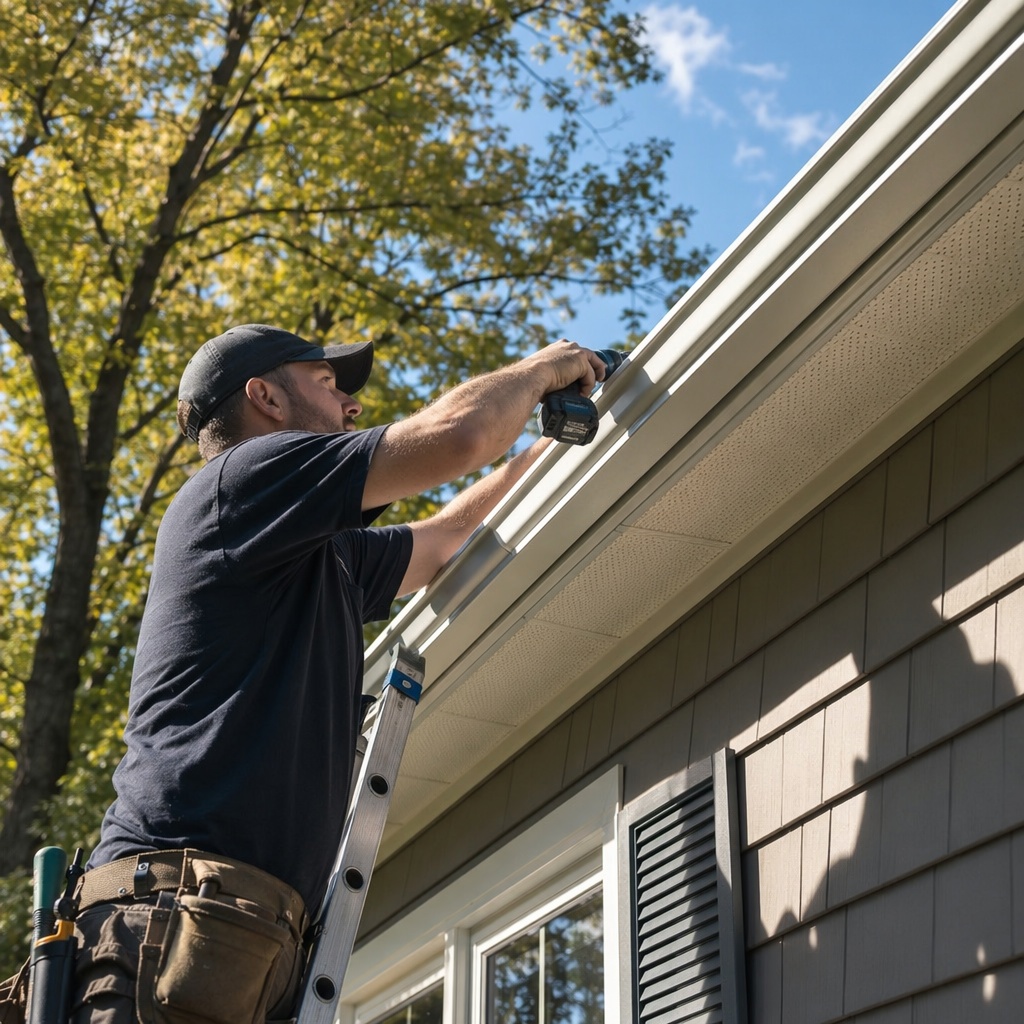
This is the core of the installation process and takes the most time. For seamless gutters, the fabrication machine is set up on-site and sections are cut to the exact lengths needed. For sectional systems, pre-cut gutter sections are joined with connectors and sealed at each joint.
Hangers are installed at regular intervals — typically every two feet — to provide solid support along the entire run. Downspouts are cut, fitted, and secured to the wall with brackets. Each downspout connection point is sealed to prevent leaks at the junction.
Homes with multiple rooflines require careful coordination between sections, especially at inside and outside corners where water flow must be directed precisely. This is where an experienced professional installer earns their labor cost.
Final Inspection, Water Testing, and Cleanup
Once all gutter sections and downspouts are in place, the crew conducts a final inspection. They check every hanger, joint, and end cap for security and proper sealing. Slope is verified along each run to confirm water will flow correctly.
Water testing involves running a hose along the gutters to simulate rainfall. The crew watches for pooling, leaks at joints, and proper discharge at each downspout. Any issues found are corrected immediately before the crew packs up.
Cleanup is the final step — removing old materials, clearing debris from the yard, and leaving the property in good condition. A professional crew typically completes cleanup within 30 minutes.
Different Installation Scenarios and Time Expectations
Standard Single‑Story Homes with Simple Rooflines
A single story home with a straightforward roof line is the fastest installation scenario. With 150 to 200 linear feet of aluminum gutters and a two-person crew, the entire job — including removal of old gutters, installation, and cleanup — can be completed in five to eight hours.
These projects rarely encounter unexpected complications. The fascia board is easy to access, ladders are sufficient without scaffolding, and the simple roof design means fewer corners and transitions to navigate.
Multi‑Story or Complex Roofs with Multiple Rooflines
Two story homes and properties with complex roof designs require significantly more time. Accessing upper rooflines safely requires taller ladders or scaffolding, which takes time to set up and move around the property. If you’re planning for a larger home, reviewing top gutter picks for two story houses can help you choose the right system before installation day.
Multiple rooflines mean more transitions, more downspouts, and more precise slope calculations. A complex home with 300 or more linear feet of guttering can easily take two full days for a professional crew to complete properly.
Seamless Gutters, Gutter Guards, and Add‑On Accessories
Seamless gutters add time upfront for on-site fabrication but often speed up the hanging process since there are fewer joints to seal. The net effect on total installation time is roughly neutral compared to high-quality sectional systems.
Adding gutter guards extends the project by two to four hours. The type of guard matters — some snap directly onto existing gutters while others require more involved installation. Discuss add-ons with your installer during the planning phase so they can account for the additional time in their schedule.
DIY vs. Professional Installation Time Comparisons
DIY installation takes considerably longer than professional work. A homeowner tackling their first gutter installation might spend an entire weekend completing a job that a professional crew finishes in one day. The learning curve, tool setup, and slower pace all contribute to the extended time frame.
DIY installation also carries higher risk of errors that require correction later. Improper slope, inadequate sealing, and poorly secured hangers are common mistakes that lead to water damage and costly repairs. For most homeowners, the labor cost of hiring a professional installer is well worth the time saved and quality gained.
Conclusion
Realistic Time Expectations and How to Prepare
For most homes, gutter installation is a one-day project. Simple single story homes can be done in half a day, while larger or more complex properties may require two days. Setting realistic expectations before the crew arrives helps the project run smoothly.
Prepare your property by clearing the area around the home’s perimeter, trimming back any overhanging branches, and ensuring the crew has easy access to all sides of the house. These small steps can shave time off the installation and prevent unnecessary delays.
Questions to Ask Your Installer About the Timeline
Before hiring anyone, ask specifically how long they estimate the job will take and what factors could extend that timeline. A confident, experienced contractor worth hiring will give you a clear answer based on your specific home, not a vague range.
Ask whether the estimate includes removal of old gutters, fascia repairs if needed, and final water testing. These details matter. A quote that seems fast might be cutting corners on steps that protect your home long-term.
FAQ
Can gutter installation be completed in one day for most homes?
Yes. The majority of residential gutter installations are completed within a single day. A professional installer working with a two-person crew can handle most average-sized homes in five to eight hours. Larger homes or those requiring significant repairs may extend into a second day.
What might cause my gutter installation to take longer than expected?
Several factors can extend the time frame unexpectedly. Discovering rotted fascia board, encountering difficult roof line configurations, dealing with poor weather conditions, or adding gutter guards and accessories mid-project are the most common causes. Discussing potential complications with your installer beforehand reduces the chance of surprises.
How can I help ensure the installation stays on schedule?
Clear communication and proper preparation make a significant difference. Confirm the appointment details in advance, ensure the crew has unobstructed access to all sides of your home, and have any decisions about downspout placement or gutter guard additions finalized before work begins. Reviewing key questions to ask before hiring your installer helps you arrive at that first conversation fully prepared.