

Your gutters do a quiet but critical job every time it rains. They channel water away from your roof, walls, and foundation, protecting your home from the kind of damage that costs thousands to fix. Most homeowners don’t think about their gutters until something goes visibly wrong — and by then, the damage may already be spreading.
The tricky part is knowing whether you need a simple repair or a full gutter replacement. Some problems, like a loose bracket or a minor clog, are easy fixes. Others signal that the entire system has reached the end of its useful life. Catching those signs early can save you from far more expensive home maintenance headaches down the road.
This guide walks you through the most common and telling signs that your gutters need to be replaced, not just patched. From visible structural damage to subtle clues around your home’s foundation and siding, understanding what to look for puts you in control of your home’s protection.
Visible Damage to the Gutter System
The most straightforward signs of gutter failure are the ones you can see with your own eyes. A thorough visual inspection of your gutters — ideally after a heavy rain — can reveal a lot about the condition of the system. Don’t wait for a professional inspection to notice obvious physical deterioration.
Cracks, holes, rust, and separated seams
Small cracks might seem harmless, but they grow quickly under the stress of water weight, temperature changes, and debris buildup. Even a hairline crack can allow water to drip directly onto your fascia board, leading to rot and structural damage over time.
Holes are a more advanced version of the same problem. Whether caused by rust, impact, or age-related wear, holes in your gutters mean water is escaping exactly where it shouldn’t. Rust is especially common in older steel gutters and is a strong indicator that the material has broken down beyond repair.
Separated seams are another red flag. Sectional gutters are joined at seams, and those joints are often the first place a system fails. If you notice gaps where two sections meet, water is pouring through those gaps every time it rains. If you’re considering an upgrade, understanding how long seamless gutters last can help you decide whether switching to a seamless system makes more sense than repeated repairs.
| Damage Type | Severity | Repair or Replace? |
|---|---|---|
| Small cracks | Low to moderate | Repair if isolated |
| Holes | Moderate to high | Replace if widespread |
| Rust patches | High | Replace |
| Separated seams | Moderate | Repair or replace |
| Multiple issues combined | Very high | Replace |
Sagging sections or gutters pulling away from the roofline
Sagging gutters are a serious structural problem. When gutters sag, it means they’re holding standing water, which adds significant weight and pulls the system away from the fascia board it’s attached to. This is not a cosmetic issue — it’s a functional failure.
Gutters that are pulling away from the roofline can no longer direct water properly. Instead of flowing toward the downspout, water spills over the sides or pools in low spots. This kind of misalignment accelerates damage to your siding, foundation, and landscaping.
In many cases, sagging is caused by damaged or missing hangers. While replacing hangers is sometimes a viable repair, widespread sagging across multiple sections usually means the gutters themselves have warped or weakened beyond the point of reliable function.
Water Not Draining Properly
A gutter system that doesn’t drain properly isn’t doing its job. Water that doesn’t move efficiently through the system ends up somewhere it shouldn’t — against your walls, under your roof, or pooling around your foundation. Poor drainage is one of the clearest signs that something is seriously wrong.
Overflowing gutters and standing water
Gutters overflow for two main reasons: they’re clogged, or they’re too small for the volume of water your roof sheds. If you’ve cleared out all the debris and your gutters still overflow during moderate rain, the system itself may be inadequate or damaged. Understanding the right gutter size for your home’s roof area is essential when planning a replacement.
Standing water inside the gutter channel is another warning sign. Water should flow freely toward the downspout and drain completely after rain stops. If water sits in the gutter for hours or days, the pitch is off or the system is blocked in a way that cleaning alone won’t fix.
Persistent standing water accelerates rust, promotes mold growth, and adds weight that causes further sagging. It’s a cycle that compounds quickly if left unaddressed.
Leaks, drips, and poor downspout flow
Leaks along the gutter channel or at the joints are a direct sign of system failure. Dripping water along the fascia board or down the exterior wall during rain is easy to spot and should never be ignored. Even small leaks cause wood rot, peeling paint, and mold over time.
Downspout performance matters just as much as the gutters themselves. If water trickles out of the downspout instead of flowing steadily, there’s likely a blockage or a structural issue within the downspout itself. Crushed or disconnected downspout sections are common culprits.
If cleaning the downspout doesn’t restore proper flow, the problem may be a collapsed section or an undersized downspout that can’t handle your roof’s water volume. At that point, replacement is often the more practical solution.
Damage Around the Home
Sometimes the most telling signs of gutter failure aren’t on the gutters themselves — they’re on the surfaces around your home. Water damage spreads, and gutters that aren’t working properly leave evidence on your walls, soil, and basement.
Peeling paint, stains, mold, and mildew
Peeling paint on your exterior walls or fascia board is a classic sign of water intrusion. When gutters overflow or leak, water runs down surfaces it shouldn’t touch, saturating wood and causing paint to bubble and peel. This kind of siding damage is both cosmetic and structural.
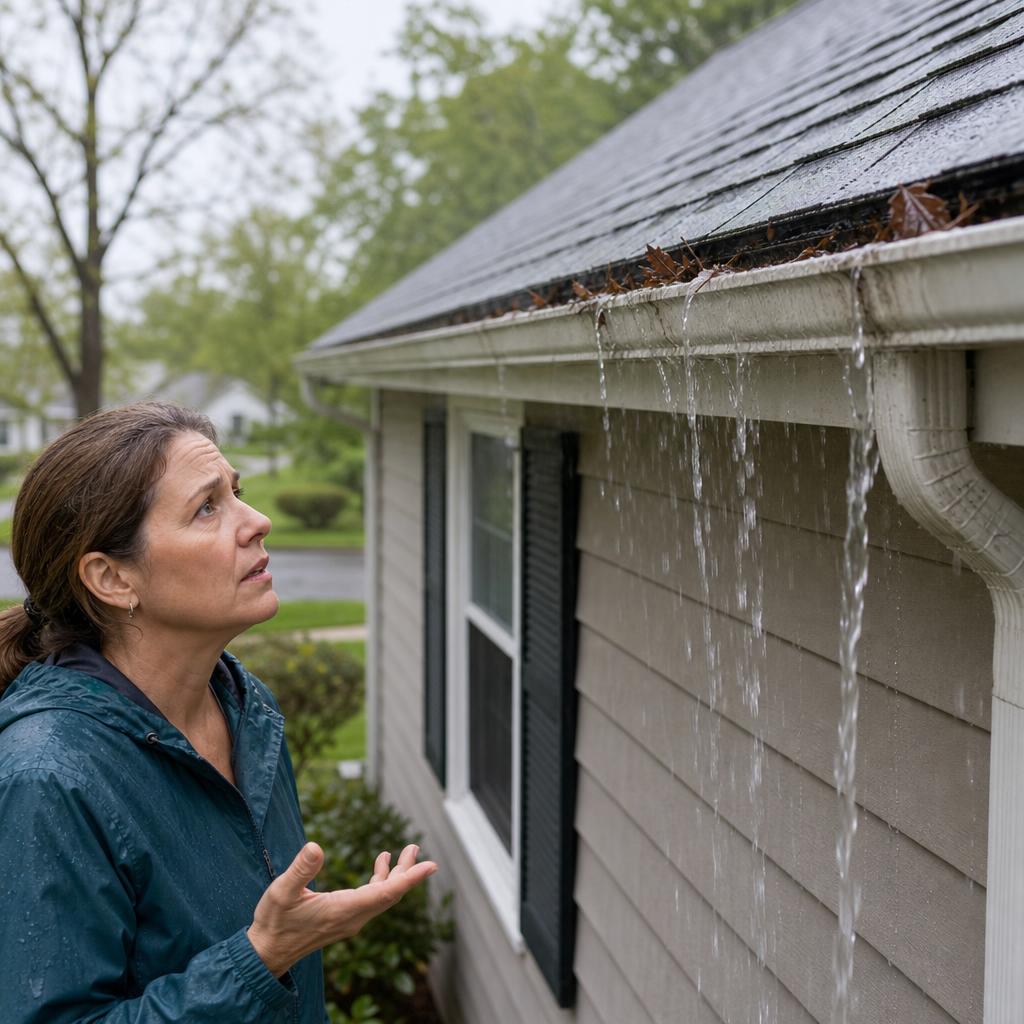
Dark staining along the exterior walls beneath your gutters is another indicator. These stains are caused by water consistently running down the same path — a path it’s taking because the gutter isn’t containing it properly. Mold and mildew follow moisture, and once they take hold on your siding or fascia, the damage spreads fast.
Mold on your exterior isn’t just an aesthetic problem — it can work its way into your wall structure and become a much more expensive issue to remediate. If you’re seeing mold growth near your roofline or along your walls, your gutters deserve a close look.
Soil erosion, foundation pooling, and basement moisture
Gutters exist to move water away from your home’s foundation. When they fail, that water has to go somewhere — and it usually goes straight down, right next to your home. Soil erosion around the perimeter of your house is a visible sign that water is dumping in concentrated areas rather than being dispersed properly.
Foundation pooling is more serious. Water that collects against your foundation creates hydrostatic pressure, which can cause cracks in the foundation over time. This is one of the most expensive forms of water damage a homeowner can face, and failing gutters are a common contributing factor.
Basement flooding or persistent basement moisture often traces back to poor gutter performance. If your basement gets wet after heavy rain and you haven’t identified another cause, walk the perimeter of your home and look at where water is landing when it leaves your roof. The connection between gutter failure and basement moisture is direct and well-documented.
When Repair Is No Longer Enough
There’s a point where patching and fixing becomes a losing battle. Gutter repair makes sense for isolated problems on an otherwise sound system. But when problems are recurring, widespread, or tied to the age and material of the gutters themselves, replacement is the smarter investment.
Frequent clogs, repeated fixes, and recurring leaks
If you’re cleaning your gutters multiple times per season and still dealing with overflow, the system may not be designed to handle your home’s water load. Gutter guards can help reduce debris buildup, but they’re not a solution for gutters that are structurally compromised or improperly sized.
Repeated repairs are a financial red flag. If you’ve had the same section resealed, the same hanger replaced, or the same leak patched more than once, the underlying problem hasn’t been solved. Each repair adds cost without addressing the root cause.
Recurring leaks in the same location almost always mean the material has failed in that area. Sealants and patches are temporary fixes on aging or damaged gutters. At some point, the cost of repeated gutter repair exceeds the cost of a full replacement — and the replacement delivers lasting results.
Age, material wear, and signs of system-wide failure
Aluminum gutters are among the most common residential gutter materials, and they have a finite lifespan. As they age, they become brittle, lose their shape, and develop widespread small failures rather than isolated ones. When problems appear across the entire system rather than in one spot, that’s a system-wide failure — and repair isn’t a realistic option.
Material wear shows up as widespread fading, chalking, or surface corrosion that goes beyond cosmetic issues. If the gutters feel thin, flex easily, or show rust throughout rather than in patches, the material has degraded. Before committing to a replacement system, it’s worth exploring your options — from comparing gutter profiles like K-style and half-round to evaluating different materials for your climate and home style.
A full inspection by a qualified professional can confirm whether you’re dealing with isolated damage or system-wide failure. Knowing the difference saves you from either over-investing in repairs or delaying a necessary replacement.
Conclusion
Your gutters protect everything from your roof to your foundation, and when they stop working properly, the consequences spread quickly. Visible damage like cracks, holes, rust, and sagging are clear signals. But so are the subtler signs — peeling paint, soil erosion, basement moisture, and recurring leaks that no repair seems to fix permanently.
The goal isn’t to replace gutters at the first sign of trouble. It’s to recognize when the system has reached the point where replacement is more practical, more cost-effective, and more protective than continued repairs. Paying attention to these signs gives you the information you need to make that call confidently.
FAQ
How can I tell if my gutters need repair or full replacement?
Isolated damage — a single crack, a loose hanger, one leaking seam — is usually repairable. The case for full replacement builds when damage is widespread, when the same problems keep coming back, or when the gutters are old and showing material-level deterioration throughout the system. A professional inspection helps clarify which situation you’re dealing with.
What gutter problems are most urgent to address?
Foundation pooling, basement moisture, and gutters pulling away from the roofline are the most urgent issues. These problems can escalate into structural damage quickly. Leaks near the fascia board are also high priority because wood rot spreads fast. Cosmetic issues like minor staining are less urgent but still worth monitoring.
Can clogged gutters cause damage that looks like replacement is needed?
Yes, absolutely. Clogged gutters cause overflow, standing water, and even sagging — all of which mimic the signs of a failing system. Always clean your gutters thoroughly before concluding that replacement is necessary. If the problems persist after a full cleaning, then the system itself is likely the issue rather than debris buildup alone.