
Choosing the right gutter system for your home is one of those decisions that seems simple on the surface but carries real long-term consequences. Get it wrong, and you’re dealing with water damage, rotting fascia boards, and costly repairs down the road. Get it right, and your home’s roof drainage works quietly and efficiently for decades.
The debate between seamless gutters and sectional gutters has been ongoing among homeowners, contractors, and home improvement enthusiasts for good reason. Both systems move water away from your foundation, but they do it differently, cost differently, and require different levels of attention over time. Understanding those differences is what separates a smart purchase from an expensive mistake.
This guide breaks down every meaningful distinction between the two systems — from gutter installation complexity and gutter cost to leak resistance, curb appeal, and long-term value. By the end, you’ll know exactly which option fits your home, your budget, and your lifestyle.
Seamless vs Sectional Gutters: Core Differences
How Each System Is Built
Sectional gutters are pre-cut into standard lengths, typically between ten and twenty feet, and joined together on-site using connectors and sealant. They’re available in a wide range of gutter materials including vinyl gutters, aluminum gutters, steel gutters, and copper gutters. The sections snap or bolt together, making them accessible for DIY gutter installation without specialized equipment.
Seamless gutters, by contrast, are fabricated on-site using a roll-forming machine that extrudes a continuous length of material — usually aluminum — to match the exact dimensions of your roofline. There are no gutter joints along the horizontal runs, only at corners and downspouts. This single-piece construction is what defines the seamless system and sets it apart from its sectional counterpart.
The table below summarizes the fundamental structural differences between the two systems.
| Feature | Seamless Gutters | Sectional Gutters |
|---|---|---|
| Construction | Single continuous piece per run | Pre-cut sections joined together |
| Gutter Seams | Only at corners and downspouts | Every 10–20 feet along the run |
| Common Materials | Aluminum, steel, copper | Vinyl, aluminum, steel, copper |
| Installation Type | Professional installation required | DIY or professional |
| Customization | Cut to exact measurements | Standard lengths, trimmed on-site |
| Leak Points | Minimal | Multiple along each run |
Key Performance Differences
The structural difference between these two systems directly affects how they perform under real-world conditions. Seamless gutters eliminate the majority of gutter seams, which are the primary failure points in any gutter system. Fewer seams mean fewer opportunities for gutter leaks to develop, especially during heavy rainfall.
Sectional gutters rely on sealant and connectors at every joint. Over time, those connections expand and contract with temperature changes, causing the sealant to crack and the joints to separate. This is where most gutter leaks originate, and it’s the core performance disadvantage of the sectional design.
Roof drainage efficiency also differs between the two. Seamless systems maintain a consistent interior profile with no ridges or lips at joints, allowing water to flow more freely toward downspouts. Sectional systems can develop small lips at joints where debris catches and clogged gutters become a recurring problem.
Feature-by-Feature Comparison
Leak Resistance and Durability
Seamless gutters win this category decisively. With gutter joints only at corners and downspout connections, the number of potential leak points is dramatically reduced. Aluminum gutters in seamless form are particularly resistant to corrosion and can handle significant water volume without warping or pulling away from the fascia board.
Sectional gutters, regardless of material, are inherently more vulnerable to gutter leaks. Every joint is a potential failure point, and even high-quality sealant degrades over time. Vinyl gutters are especially prone to cracking in cold climates, while steel gutters can rust at the joints if the protective coating is compromised.
- Seamless aluminum gutters typically outlast sectional vinyl gutters by a significant margin
- Copper gutters in seamless form offer the highest durability of any residential gutter material
- Steel gutters in sectional form are vulnerable to rust at joint connections
- Sectional gutter joints require periodic resealing to maintain water-tight performance
Maintenance and Cleaning Needs
Gutter maintenance is unavoidable regardless of which system you choose. Both types need regular cleaning to prevent clogged gutters from causing water damage to your home’s foundation, siding, and fascia board. However, the maintenance burden differs between the two systems in meaningful ways.
Sectional gutters accumulate debris more readily at joints, where small lips and ridges catch leaves and twigs. This makes cleaning more time-consuming and increases the likelihood of blockages forming between scheduled cleanings. Gutter guards can help with both systems, but they’re particularly beneficial on sectional gutters where debris tends to concentrate at joints.
Seamless gutters have a smoother interior profile, which allows debris to flush through more easily during rainfall. They still require regular cleaning, but the absence of interior ridges reduces the frequency of serious blockages. If your home is surrounded by trees, the best seamless gutters for tree-heavy properties are specifically designed to handle high debris loads with minimal maintenance intervention.
Appearance and Curb Appeal
Seamless gutters offer a cleaner, more polished appearance. Without visible joints running along the roofline, the gutter system looks like a single, intentional architectural element rather than a patchwork of connected pieces. This matters more than many homeowners initially expect, especially for homes with high curb appeal or those being prepared for resale.
Sectional gutters show their joints, which can look utilitarian or dated depending on the home’s style. Over time, the joints may also discolor or stain differently than the surrounding sections, creating an uneven appearance. That said, sectional systems are available in a wide range of colors and profiles, giving homeowners flexibility in matching their home’s exterior.
Both systems are available in standard colors, but seamless gutters can be custom-colored to match virtually any exterior palette. This level of customization is one reason seamless systems are the preferred choice for higher-end home improvement projects.
Installation Process and Repairability
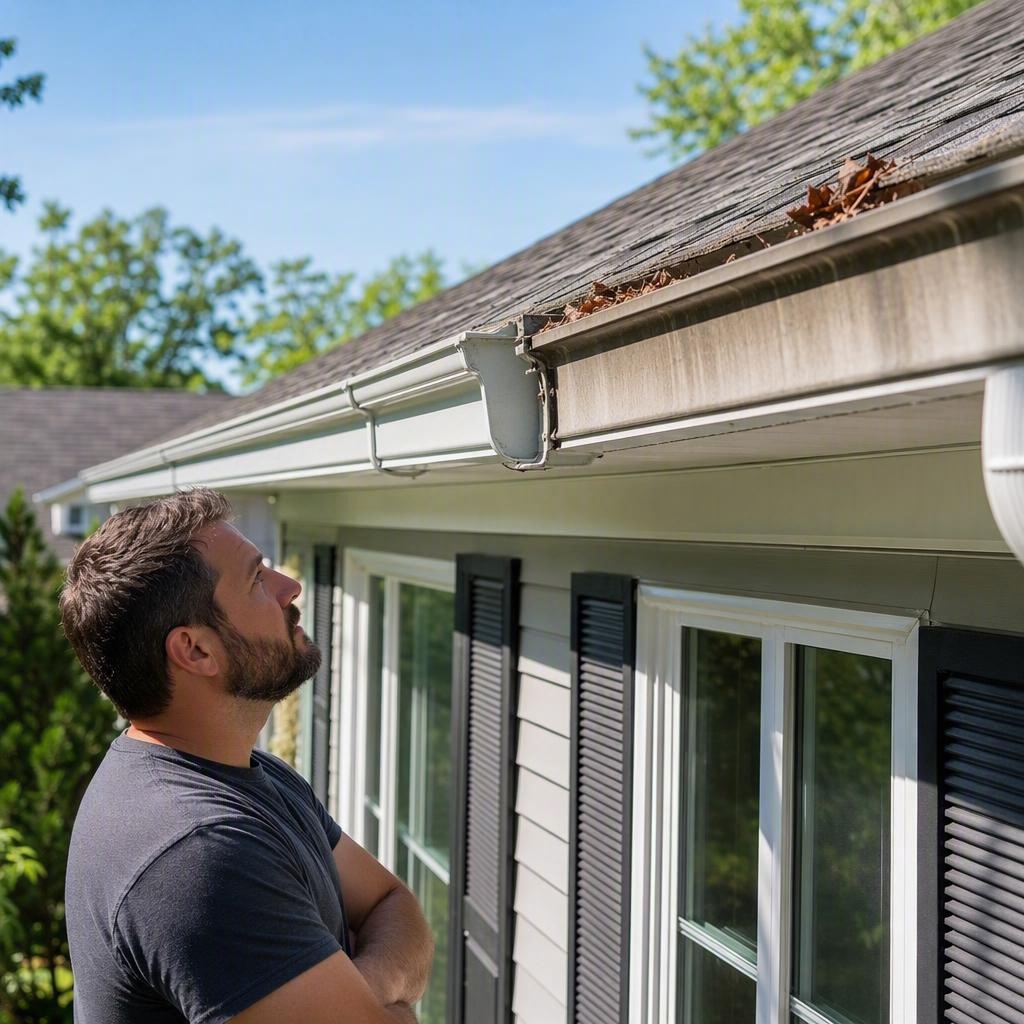
Gutter installation differs significantly between the two systems. Sectional gutters can be purchased at most home improvement stores and installed by a motivated homeowner with basic tools. The process involves cutting sections to length, connecting them with joiners and sealant, and securing them to the fascia board with hangers. It’s genuinely accessible for DIY gutter installation.
Seamless gutters require professional installation because the roll-forming machine that creates them is expensive and not practical for one-time residential use. A contractor brings the machine to your home, fabricates the gutters on-site, and installs them in a single visit. If you want to understand what that process looks like from start to finish, this overview of what to expect during gutter installation covers the full timeline and process in detail.
Repairability is where sectional gutters have a genuine advantage. If one section is damaged, it can be removed and replaced without affecting the rest of the system. Seamless gutters, being continuous runs, require a contractor to fabricate and install a replacement section if damage occurs. This makes gutter repair more involved and typically more expensive for seamless systems.
Pricing, Value, and Long-Term Costs
Upfront Material and Installation Costs
Sectional gutters are less expensive upfront. Vinyl gutters are the most affordable option, with material costs well below aluminum or steel alternatives. Aluminum sectional gutters fall in the mid-range, while copper gutters represent the premium tier regardless of whether they’re seamless or sectional.
Seamless gutters cost more at the point of installation. The gutter cost includes both the material and the professional installation labor, since DIY is not a practical option. Aluminum gutters in seamless form are the most common and represent the best balance of cost and performance for most residential applications.
- Sectional vinyl gutters: lowest upfront cost, shortest lifespan
- Sectional aluminum gutters: moderate cost, reasonable durability
- Seamless aluminum gutters: higher upfront cost, significantly longer lifespan
- Seamless copper gutters: premium cost, exceptional longevity and appearance
Ongoing Maintenance and Replacement Costs
The true gutter cost comparison shifts when you factor in long-term expenses. Sectional gutters require more frequent resealing, more frequent gutter repair at joints, and earlier gutter replacement overall. These recurring costs add up over time and often exceed the initial savings from choosing a cheaper system.
Seamless gutters require less frequent intervention. The reduced number of gutter seams means fewer leak points to monitor and repair. When properly installed and maintained, seamless aluminum gutters can last significantly longer than sectional vinyl or aluminum alternatives, reducing the frequency of full gutter replacement cycles.
Foundation protection is another long-term cost factor. A gutter system that leaks or fails to direct water away from your home can cause serious water damage to your foundation, basement, and landscaping. The cost of foundation repair far exceeds any savings made on cheaper gutter materials, making this a critical consideration in the total cost equation.
Which Option Offers Better Overall Value
For most homeowners, seamless gutters offer better overall value when the full lifecycle cost is considered. The higher upfront investment is offset by lower maintenance costs, fewer repairs, and a longer service life. The reduction in gutter leaks alone can prevent significant water damage expenses over the years.
Sectional gutters offer better value in specific scenarios — primarily for budget-constrained homeowners, rental properties, or situations where the home will be sold in the near term. In those cases, the lower upfront gutter cost makes more financial sense than investing in a premium seamless system.
The value equation also depends on the quality of installation. Even the best seamless gutters will underperform if installed incorrectly, which is why selecting a qualified contractor matters as much as choosing the right system. Knowing the right questions to ask your gutter installer before hiring can help you avoid costly mistakes and ensure the job is done right the first time.
Unique Selling Points and Best Use Cases
When Seamless Gutters Make the Most Sense
Seamless gutters are the right choice for homeowners who plan to stay in their home long-term and want a low-maintenance, high-performance system. They’re particularly well-suited for homes in regions with heavy rainfall, where roof drainage demands are high and gutter leaks can cause rapid water damage.
Homes with complex rooflines benefit from seamless gutters because the on-site fabrication process allows for precise customization. Every run is cut to exact measurements, eliminating the guesswork and gaps that can occur when trimming sectional pieces to fit unusual angles or lengths. For larger properties, including multi-story homes that need reliable gutter performance, seamless systems provide the consistency and durability that sectional systems struggle to match.
- Long-term homeowners seeking minimal maintenance
- Homes in high-rainfall or high-debris environments
- Properties with complex or custom rooflines
- Homeowners prioritizing curb appeal and resale value
- Situations where foundation protection is a primary concern
When Sectional Gutters Are the Better Choice
Sectional gutters make sense when budget is the primary constraint and the homeowner is comfortable with more frequent maintenance. They’re also the practical choice for DIY gutter installation enthusiasts who want to manage the project themselves without hiring a contractor.
Rental properties and investment homes often benefit from sectional systems because individual sections can be replaced quickly and inexpensively when damaged. This repairability advantage makes sectional gutters a pragmatic choice in situations where cost control and ease of repair outweigh the performance benefits of seamless systems.
- Budget-conscious homeowners with limited upfront funds
- DIY homeowners comfortable with hands-on installation
- Rental or investment properties where cost control is essential
- Homes in mild climates with low rainfall and minimal debris
- Short-term ownership situations where resale is planned soon
Homeowner Profiles and Scenario-Based Recommendations
A first-time homeowner on a tight budget who enjoys DIY projects will likely find sectional aluminum gutters to be a practical starting point. The lower gutter cost and accessible installation process make it a manageable home improvement project, and the system can be upgraded later when budget allows.
A long-term homeowner with a mature tree canopy surrounding the property should strongly consider seamless gutters with gutter guards. The combination reduces clogged gutters, minimizes gutter maintenance frequency, and provides better protection against water damage over the long haul. The higher upfront investment pays off through reduced labor and repair costs over time.
A homeowner preparing to sell their property within a few years faces a different calculation. New seamless gutters can improve curb appeal and signal to buyers that the home has been well-maintained, potentially adding value to the sale. However, if the existing sectional system is functional, a thorough cleaning and resealing may be sufficient to present the home well without the cost of full gutter replacement.
Conclusion
Both seamless and sectional gutters serve the same fundamental purpose — protecting your home from water damage by directing roof drainage away from your foundation, walls, and landscaping. The right choice depends on your budget, your plans for the property, your tolerance for maintenance, and the specific demands of your local climate.
Seamless gutters deliver superior leak resistance, better appearance, and lower long-term maintenance costs. Sectional gutters offer lower upfront costs, DIY accessibility, and easier individual section repair. Neither system is universally superior — the best choice is the one that aligns with your specific situation.
If you’re moving forward with a new gutter installation, take the time to evaluate contractors carefully. Understanding how to choose a qualified gutter installation contractor is just as important as choosing the right gutter system. A well-installed sectional system will outperform a poorly installed seamless one every time.
FAQ
Are seamless gutters worth the higher upfront cost?
For most homeowners, yes. The higher upfront gutter cost is offset by lower maintenance expenses, fewer gutter repairs, and a longer service life. Seamless gutters eliminate the majority of gutter seams, which are the primary source of gutter leaks in sectional systems. Over a full ownership period, the total cost of ownership for seamless gutters is typically lower than for sectional alternatives, especially when you factor in the cost of water damage prevention and reduced gutter maintenance labor.
Can sectional gutters be a good choice for DIY homeowners?
Absolutely. Sectional gutters are one of the most accessible home improvement projects available to DIY homeowners. Vinyl gutters and aluminum gutters in sectional form are available at most hardware stores and can be installed with basic tools. The key is ensuring proper slope toward downspouts, secure attachment to the fascia board, and thorough sealing at all gutter joints. Regular inspection and resealing of those joints will extend the system’s performance life considerably.
Which gutter type is easier to repair after damage?
Sectional gutters are significantly easier to repair. Because the system is made up of individual sections connected at gutter joints, a damaged section can be removed and replaced without disturbing the rest of the installation. Gutter repair on a sectional system is a straightforward DIY task in most cases. Seamless gutters require a contractor to fabricate a replacement section on-site, making gutter repair more involved and more expensive. However, seamless systems typically require less frequent repair overall due to their superior construction and reduced number of failure points.