

Keeping your gutters clean is one of the most straightforward home maintenance tasks you can do — but it comes with real risks if you skip the safety steps. Every year, thousands of homeowners end up injured from falls off ladders while attempting routine gutter maintenance. The good news is that with the right preparation, tools, and technique, you can get the job done safely and effectively without calling in help every single time.
This guide walks you through everything you need to know, from understanding the hazards involved to executing each step with confidence. Whether your gutters are packed with leaves, full of standing water, or showing early signs of damage, the process is manageable when you approach it methodically. Safety is not an afterthought here — it is built into every step.
Gutters protect your home’s foundation, siding, and landscaping by directing water away from the structure. When they get clogged with debris, that protection disappears fast. Taking the time to clean them properly — and safely — is one of the smartest things you can do as a homeowner.
Understanding Gutter Cleaning Risks and Safety Basics
Why Regular Gutter Cleaning Matters
Clogged gutters cause water to back up and overflow, which can lead to foundation erosion, basement flooding, and rotting fascia boards. The damage compounds quickly and quietly, often going unnoticed until it becomes expensive. Knowing how often you should clean your gutters based on your local environment and tree coverage is the first step toward preventing these problems.
Seasonal maintenance is not optional — it is essential. Homes surrounded by trees may need cleaning multiple times per year, while others can get by with less frequent attention. The key is consistency.
| Surrounding Environment | Recommended Cleaning Frequency | Primary Debris Type |
|---|---|---|
| Heavy tree coverage | 3 to 4 times per year | Leaves, twigs, seeds |
| Moderate tree coverage | 2 times per year | Leaves, dirt buildup |
| Minimal tree coverage | Once per year | Dust, occasional debris |
| Open or urban setting | Once per year or as needed | Dirt, bird nesting material |
Common Hazards When Cleaning Gutters
Falls are the most serious risk, but they are not the only one. Homeowners also face hazards from electrical lines near the roofline, unstable ladder placement, and exposure to mold, bacteria, and sharp debris inside the gutters themselves.
Understanding these risks before you climb is not optional — it is the foundation of safe gutter cleaning. Wet conditions dramatically increase the danger of slipping, both on the ladder and on the roof surface. Always assess your environment before starting.
Essential Safety Principles Before You Start
Never work alone. Having a spotter on the ground is one of the simplest and most effective fall protection measures available. They can stabilize the ladder, hand up tools, and call for help if something goes wrong.
- Always tell someone you are working at height before starting
- Never overreach — move the ladder instead
- Keep three points of contact on the ladder at all times
- Avoid working near power lines without professional guidance
- Never stand on the top two rungs of any ladder
Preparation: Tools, Protective Gear, and Safe Setup
Choosing the Right Ladder and Safe Placement
An extension ladder is the standard choice for most single-story and two-story homes. It gives you the reach you need while keeping your feet on solid ground rather than on the roof. For homes with two stories, make sure your ladder extends at least three feet above the roofline for safe access.
Place the ladder on firm, level ground. Use ladder levelers or leg stabilizers on uneven surfaces, and always set the ladder at the correct angle — roughly one foot out for every four feet of height.
Protective Clothing, Gloves, and Eye Protection
Gutter debris is surprisingly hazardous. Decomposing leaves harbor mold spores, and sharp metal edges inside the gutter channel can cut through thin gloves easily. Thick rubber or leather gloves are your best defense.
Safety goggles protect your eyes from debris that dislodges when you flush the downspout or use a leaf blower. Non-slip shoes with good ankle support are equally important — they reduce the risk of slipping on ladder rungs and wet surfaces.
- Heavy-duty rubber or leather gloves
- Safety goggles or protective glasses
- Non-slip shoes with closed toes
- Long-sleeved shirt to protect arms from sharp edges
- Old clothing you do not mind getting dirty
Recommended Tools for Safe and Efficient Cleaning
Having the right tools reduces the time you spend on the ladder and minimizes awkward reaching. A gutter scoop or plastic trowel is ideal for removing packed debris without scratching the gutter surface. A bucket with a hook attachment keeps your hands free and prevents you from dropping tools.
A garden hose with a spray nozzle handles flushing duties for most clogs. For stubborn blockages, a wet-dry vacuum with a gutter cleaning kit attachment works well. A pressure washer can also be effective, but requires careful handling to avoid damaging older gutters or forcing water under shingles.
- Gutter scoop or plastic trowel
- Bucket with ladder hook
- Garden hose with adjustable nozzle
- Wet-dry vacuum with gutter cleaning kit
- Leaf blower with gutter attachment (optional)
- Pressure washer (use with caution)
Inspecting Your Work Area and Weather Conditions
Never clean gutters in wet, windy, or icy conditions. Wet ladder rungs and slippery roof surfaces are responsible for a significant portion of fall injuries during home maintenance. Check the forecast and plan your cleaning for a dry, calm day.
Walk the perimeter of your home before climbing. Look for overhead power lines, soft ground that could shift under ladder feet, and any visible gutter damage that might affect your approach. A quick ground-level inspection saves time and prevents surprises.
Step-by-Step Guide: How to Clean Gutters Safely
Safe Access to the Roof or Ladder
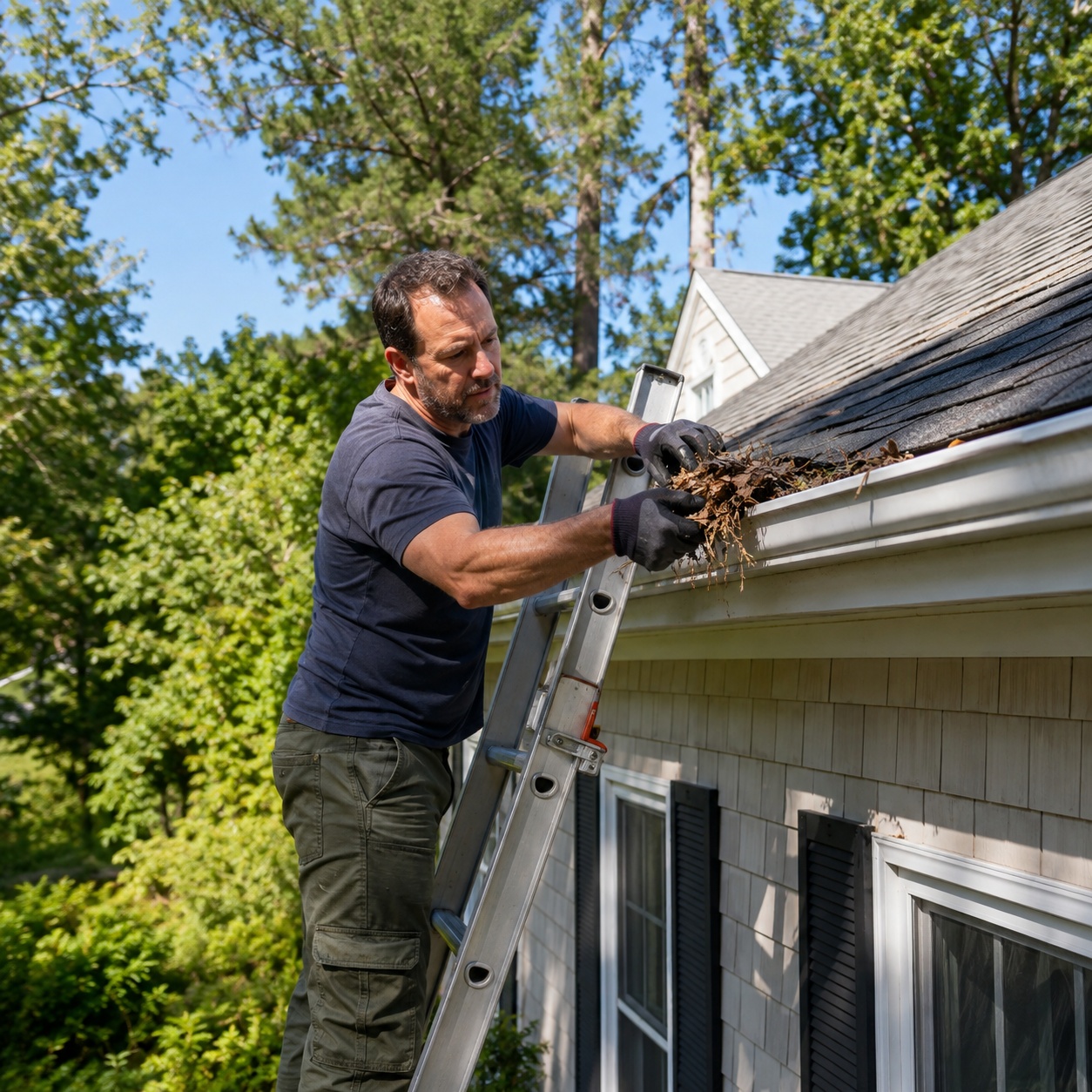
Position your extension ladder at the correct angle and have your spotter hold the base firmly. Climb slowly, maintaining three points of contact at all times. Carry tools in a bucket hooked to the ladder rather than in your hands.
Avoid stepping onto the roof unless absolutely necessary. Working from the ladder is safer for most gutter cleaning tasks. If you must access the roof, use proper fall protection equipment and wear non-slip shoes.
Removing Debris by Hand or With Tools
Start at the end of the gutter farthest from the downspout and work toward it. Use your gutter scoop or trowel to lift out packed leaves, twigs, and dirt. Drop the debris into your bucket rather than onto the ground below, which keeps your work area clean and reduces cleanup time.
For lighter debris, a leaf blower with a gutter attachment can speed up the process significantly. Work in short sections, repositioning the ladder frequently rather than reaching sideways. Overreaching is one of the leading causes of ladder falls.
Flushing Gutters and Downspouts Without Damage
Once the bulk of the debris is removed, use a garden hose to flush the gutter from the high end toward the downspout. This confirms the gutter is draining correctly and reveals any remaining clogs. Watch the water flow — it should move steadily toward the downspout without pooling.
If the downspout is clogged, insert the hose into the top and run water at full pressure. For stubborn clogs, a plumber’s snake or a wet-dry vacuum can dislodge the blockage. Avoid using excessive water pressure directly against gutter seams, as this can loosen joints over time.
Maintaining Balance and Body Position While Working
Keep your hips between the ladder rails at all times. Your belt buckle is a useful reference point — if it moves outside the rail, you are overreaching and need to reposition. Move the ladder as often as needed rather than stretching to reach the next section.
Fatigue increases the risk of mistakes, so take breaks and stay hydrated, especially on warm days. Never rush the process. Steady, deliberate movements are always safer than working quickly.
Safe Cleanup and Disposing of Gutter Waste
Lower your bucket of debris carefully before descending the ladder. Do not attempt to carry a full, heavy bucket while climbing down. Gutter debris can be composted if it is free of contaminants, or bagged for regular waste collection.
Rinse down any debris that landed on the roof or driveway with your garden hose. Store your tools properly and inspect your ladder for any damage before putting it away. A quick post-job check ensures everything is ready for next time.
Preventive Maintenance and Troubleshooting Common Problems
Identifying Signs of Damage or Blockages
Visible sagging, rust stains, peeling paint on fascia boards, and water marks on siding are all signs that your gutters need attention beyond routine cleaning. Check the inside of the gutter channel for cracks, holes, and separated joints while you are up there.
Downspout clogs often go unnoticed until water overflows during heavy rain. If you see water spilling over the front edge of the gutter rather than exiting through the downspout, a clog is the likely culprit.
Dealing With Overflow, Sagging, and Leaks
Sagging gutters are usually caused by broken or missing hangers. These are inexpensive to replace and can be done during your cleaning session. Leaking joints can be resealed with gutter sealant applied from the inside of the channel.
Overflow that persists after cleaning may indicate that the gutter pitch is incorrect. Gutters should slope slightly toward the downspout — roughly a quarter inch for every ten feet of run. Adjusting the pitch requires repositioning the hangers, which is a manageable DIY repair for most homeowners.
When to Use Gutter Guards or Professional Services
Gutter guards reduce the frequency of cleaning by blocking large debris from entering the channel. They are not maintenance-free, but they do significantly cut down on the volume of material that accumulates. Mesh-style gutter guards tend to perform best across a range of debris types.
If your gutters are severely damaged, if your home is particularly tall, or if you are not comfortable working at height, a professional cleaning service is the right call. If damage is extensive enough to require replacement, understanding how to choose a qualified gutter installation contractor will help you get the job done right without overpaying or dealing with substandard work.
Conclusion
Cleaning your gutters safely comes down to preparation, the right tools, and disciplined technique. The risks are real, but they are entirely manageable when you follow a structured approach. Use a stable extension ladder, wear gloves and safety goggles, work with a spotter, and never overreach.
Consistent seasonal maintenance prevents the kind of damage that turns a simple cleaning job into a costly repair. Treat gutter cleaning as a routine part of home ownership, not an occasional chore, and your home will be better protected year-round.
FAQ
How often should I clean my gutters to stay safe and prevent damage?
Most homes benefit from cleaning gutters at least twice per year — once in late spring and once in late fall. Homes with heavy tree coverage may need three or four cleanings annually. Regular cleaning prevents clogs, reduces overflow risk, and makes each session faster and easier than dealing with heavily packed debris.
Is it safer to clean gutters from the roof or from a ladder?
Working from a ladder is generally safer for most homeowners. The roof surface can be slippery, and moving around on it introduces additional fall risks. An extension ladder with proper placement and a spotter on the ground gives you stable, controlled access to the gutter without the added hazard of navigating a pitched roof surface.
When should I stop trying to clean gutters myself and call a professional?
Call a professional cleaning service if your home is more than two stories tall, if you are not comfortable working at height, or if you discover significant structural damage during your inspection. Professionals have the equipment and training to handle difficult access situations safely. If your gutters need full replacement rather than just cleaning, working with a reputable contractor ensures the job is done correctly from the start.