

Keeping your gutters clear is one of the most overlooked aspects of home maintenance, yet it directly protects your foundation, siding, and fascia board from costly water damage. Most homeowners skip this task simply because they dread climbing a ladder. The good news is that modern tools make ground-level gutter cleaning genuinely effective, and you do not need to leave the ground to get the job done properly.
Ladder falls are among the most common causes of serious home improvement injuries. Avoiding that risk entirely while still maintaining clean, functional gutters is not a compromise — it is a smarter approach. This guide walks you through every method, tool, and strategy you need to handle gutter maintenance safely from the ground.
If you want a broader overview of safe practices before getting started, this step-by-step guide to cleaning gutters safely covers the full picture. For now, let us focus specifically on keeping your feet firmly planted on solid ground.
Understanding Safe Ladder-Free Gutter Maintenance
Why gutter maintenance matters for your home
Clogged gutters cause rainwater to overflow, pooling against your home’s foundation and seeping into basements or crawl spaces. Over time, standing water in gutters also damages the fascia board behind them, leading to rot and structural issues that cost far more to repair than a simple cleaning.
Proper gutter maintenance protects your roof edge, prevents pest infestations, and ensures downspout systems channel water safely away from your property. Neglecting this task even for one season can result in significant damage.
| Problem Caused by Clogged Gutters | Area Affected | Potential Repair Cost |
|---|---|---|
| Foundation water intrusion | Basement, crawl space | High |
| Fascia board rot | Roofline | Moderate to High |
| Downspout blockage | Drainage system | Low to Moderate |
| Roof edge damage | Shingles, underlayment | High |
Key safety advantages of avoiding ladders
Working at ground level eliminates fall risk entirely. This single benefit makes ladder-free gutter cleaning the preferred method for elderly homeowners, solo workers, and anyone without a spotter. You also maintain better visibility of your surroundings and can move freely along the full length of your home.
Ground-level work reduces fatigue, which means you are less likely to rush or make careless mistakes. Safer conditions lead to more thorough cleaning overall.
Limitations of ladder-free methods you should know
Ladder-free tools work well for routine debris removal, but they have real limitations. Heavily compacted sludge, damaged gutter sections, or severe clogs deep inside a downspout may require closer inspection or hands-on intervention.
You also lose some precision when working from below, since you cannot always see exactly what you are doing inside the gutter channel. Using camera attachments helps, but some situations genuinely require professional access.
Essential Tools and Equipment for Ground-Level Cleaning
Telescoping poles and specialized gutter cleaning attachments
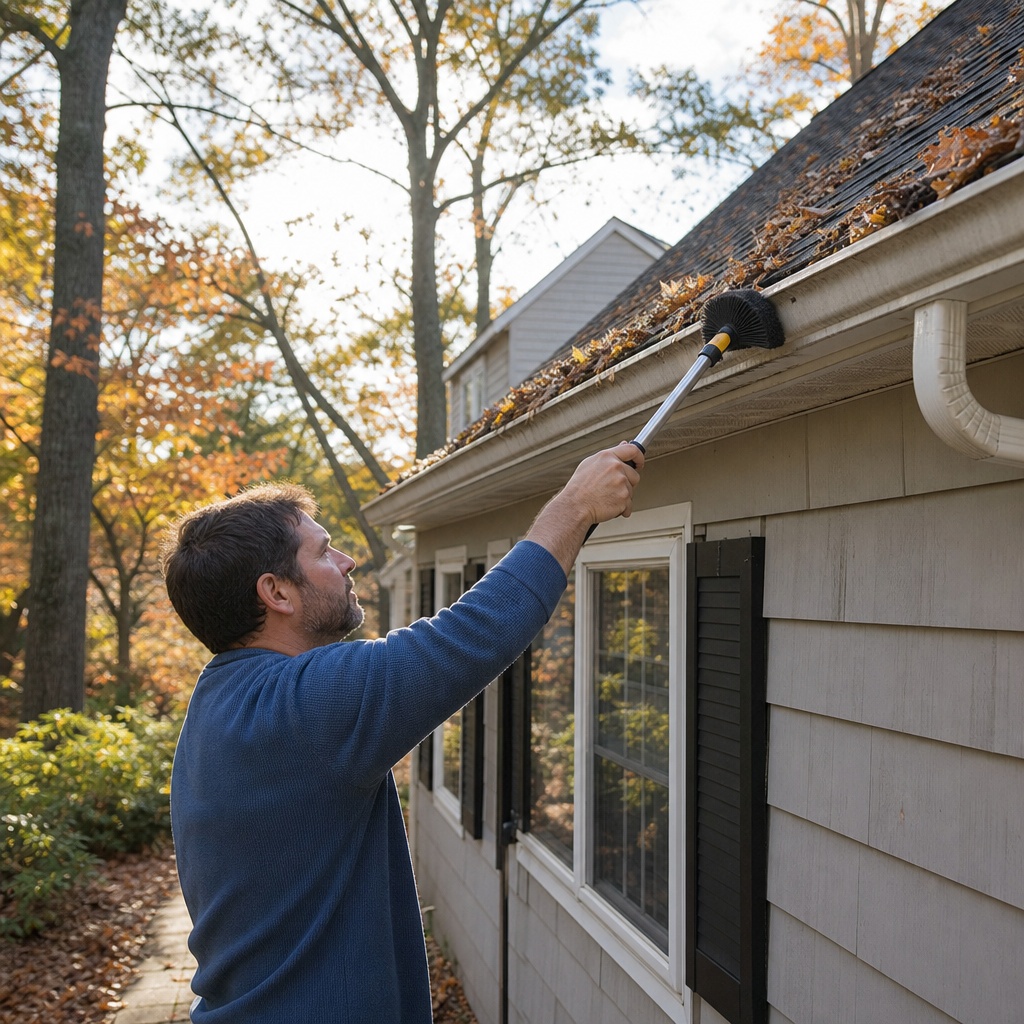
A telescoping wand or extension pole is the foundation of any ladder-free gutter cleaning kit. These poles extend from around six feet to over twenty feet, allowing you to reach gutters on single and double-story homes from the ground. Most attach to a garden hose or accept specialized gutter cleaning attachments.
Curved gutter flusher attachments hook over the gutter lip and direct water pressure along the channel. A gutter scoop attachment lets you physically dislodge and remove debris without touching it by hand.
Using pressure washers and hose-end sprayers safely
A power washer fitted with a telescoping wand and a curved nozzle delivers strong water pressure capable of blasting through compacted leaves and sludge. This method works quickly but creates significant blowback, so protective gear is essential.
- Use a low-pressure setting first to avoid damaging gutter seams or gutter sealant
- Work in sections, moving from one end toward the downspout
- Keep bystanders and pets away from the work area
- Expect debris to fall — protect plants and surfaces below
A standard garden hose with a high-pressure hose-end sprayer is a gentler alternative that works well for lighter debris loads.
Leaf blowers, vacuums, and other powered options
A leaf blower fitted with a gutter cleaning kit attachment blows dry debris out of the channel from below. This method works best when leaves are completely dry, making it ideal for late autumn cleaning before rain arrives.
A gutter vacuum or wet-dry vacuum with an extension tube sucks debris directly out of the gutter rather than blowing it around. This is one of the cleanest methods available, since it contains the mess rather than scattering it across your yard and roof.
Personal protective gear and safety precautions
Even from the ground, gutter cleaning exposes you to falling debris, dirty water, and mold spores. Proper protective gear is non-negotiable.
- Safety glasses or goggles to protect against falling debris
- Waterproof gloves to handle wet, decomposed leaf matter
- A dust mask or respirator when dealing with dry, moldy debris
- Non-slip footwear for wet ground conditions
- Old clothing that covers your arms and legs
Step-by-Step Methods to Clean Gutters from the Ground
Preparing your work area and inspecting gutters from below
Before touching any tools, walk the perimeter of your home and visually inspect your gutters from below. Look for visible sagging, separated joints, rust stains on siding, or overflow marks that indicate where clogs are concentrated.
Move outdoor furniture, potted plants, and vehicles away from the work zone. Debris and dirty water will fall, and you want a clear path to move along the roofline without obstacles underfoot.
Flushing debris with water using angled spray nozzles
Attach your curved gutter flusher to your garden hose or telescoping wand and position it over the gutter channel. Start at the end farthest from the downspout and work toward it, pushing debris in the direction of drainage.
Use steady, sweeping motions rather than blasting one spot repeatedly, which can stress gutter joints and loosen gutter sealant at seams. Consistent water pressure across the full channel length produces better results than concentrated bursts.
Dislodging compacted leaves and sludge with pole tools
When water alone cannot shift a clog, a gutter scoop or brush attachment on your extension pole provides the mechanical force needed. Insert the attachment into the gutter channel and work it back and forth to break up compacted material.
For stubborn clogs near the downspout opening, a plumber’s snake fed through the downspout from ground level can clear blockages without climbing. Pair this with a garden hose flush afterward to confirm the clog is fully cleared.
Using camera or mirror attachments to check your progress
A small wireless camera mounted on your extension pole lets you see inside the gutter channel in real time via a smartphone app. This is one of the most useful upgrades for ladder-free gutter inspection, giving you visual confirmation that debris has been fully removed.
A simple angled mirror on a pole works as a low-cost alternative for basic gutter inspection. Neither replaces a close-up physical check, but both significantly improve your ability to verify results from the ground.
Verifying water flow and downspout performance after cleaning
Once debris removal is complete, run your garden hose at full pressure through the gutter system and watch the downspout outlet. Water should flow freely and exit at the base within a few seconds of turning on the hose.
If water backs up or drains slowly, a partial clog remains somewhere in the downspout. Repeat the flushing process or use a plumber’s snake before considering the job finished. Proper downspout performance is the final confirmation that your gutter cleaning was successful.
Preventive Strategies and Ladder-Free Maintenance Schedule
Installing gutter guards and screens with minimal climbing
Gutter guards dramatically reduce how often full cleaning is needed by blocking leaves and large debris from entering the channel. Many screen-style guards can be installed using an extension pole with a hook attachment, requiring minimal or no ladder use for single-story sections.
Before investing in guards, it is worth reading an honest breakdown of whether gutter guards are actually worth the cost for your specific situation. Guards do not eliminate maintenance entirely, but they make ground-level upkeep significantly easier and less frequent.
Ground-level techniques for maintaining downspouts and extensions
Downspout extensions that direct water away from your foundation can be checked and cleared entirely from ground level. Detach the extension, flush it with a garden hose, and reattach it once confirmed clear.
- Check downspout straps and brackets for looseness by gently tugging from below
- Look for separation at downspout joints after heavy rain
- Ensure the downspout outlet directs water at least three feet from your foundation
- Clear any debris that accumulates at the base of the downspout after storms
Creating a seasonal maintenance checklist without ladders
Knowing how often your gutters actually need cleaning depends on your local tree coverage and climate. A general seasonal schedule keeps maintenance manageable and prevents major buildup.
- Spring: Flush gutters after winter to clear seed pods, twigs, and granule buildup
- Summer: Quick visual inspection after major storms for debris accumulation
- Autumn: Full debris removal after peak leaf fall, before first frost
- Winter: Check downspout outlets for ice blockage during thaw periods
Seasonal cleaning prevents the compacted sludge that makes ground-level tools less effective and reduces the chance of a clog developing unnoticed.
When to hire a professional instead of attempting DIY work
Some situations genuinely exceed what ground-level tools can handle. Three-story homes, severely damaged gutters, persistent downspout clogs, or gutters that need resealing or realignment require professional access and expertise.
If your gutter inspection reveals sagging sections, separated joints, or visible holes, contact a qualified contractor. Choosing the right person for the job matters — this guide on selecting a reliable gutter installation contractor helps you ask the right questions and avoid costly mistakes.
Conclusion
Key takeaways for maintaining gutters safely from the ground
Ground-level gutter cleaning is not a workaround — it is a legitimate, effective approach when you use the right tools. A telescoping wand, curved gutter flusher, and either a leaf blower or wet-dry vacuum cover the vast majority of maintenance tasks without requiring a single step up a ladder.
Consistent seasonal cleaning prevents the heavy buildup that makes any method harder to execute. Pair regular flushing with gutter guards and you significantly reduce the overall maintenance burden on your home.
Balancing convenience, safety, and long-term gutter health
The best gutter maintenance routine is one you will actually follow. Ground-level methods lower the barrier enough that most homeowners complete cleaning more regularly, which produces better long-term results than infrequent ladder-based sessions.
Invest in quality tools once, establish a seasonal schedule, and know when a professional is the right call. Your gutters protect your entire home — treating their maintenance as a priority pays off in avoided repairs and lasting structural health.
FAQ
Can gutters really be cleaned effectively without using a ladder?
Yes, for the majority of homes and debris types, ground-level tools deliver thorough results. Telescoping wands, gutter vacuums, and curved spray attachments reach into the gutter channel and remove leaves, sludge, and blockages effectively. The main limitation is visibility, which camera attachments largely solve.
What is the safest tool for cleaning high gutters from the ground?
A telescoping wand paired with a curved gutter flusher attachment connected to a garden hose is the safest and most widely recommended option. It requires no power source beyond your water supply, poses minimal blowback risk compared to a power washer, and extends far enough to reach gutters on most two-story homes.
How often should I maintain my gutters if I am not using a ladder?
The frequency depends on surrounding tree coverage and local weather patterns. Homes surrounded by deciduous trees typically need cleaning twice per season during heavy leaf fall, plus a spring flush. Homes with minimal tree coverage may manage with two thorough cleanings per year. Ground-level methods make more frequent light maintenance practical, which is always better than infrequent deep cleaning.