
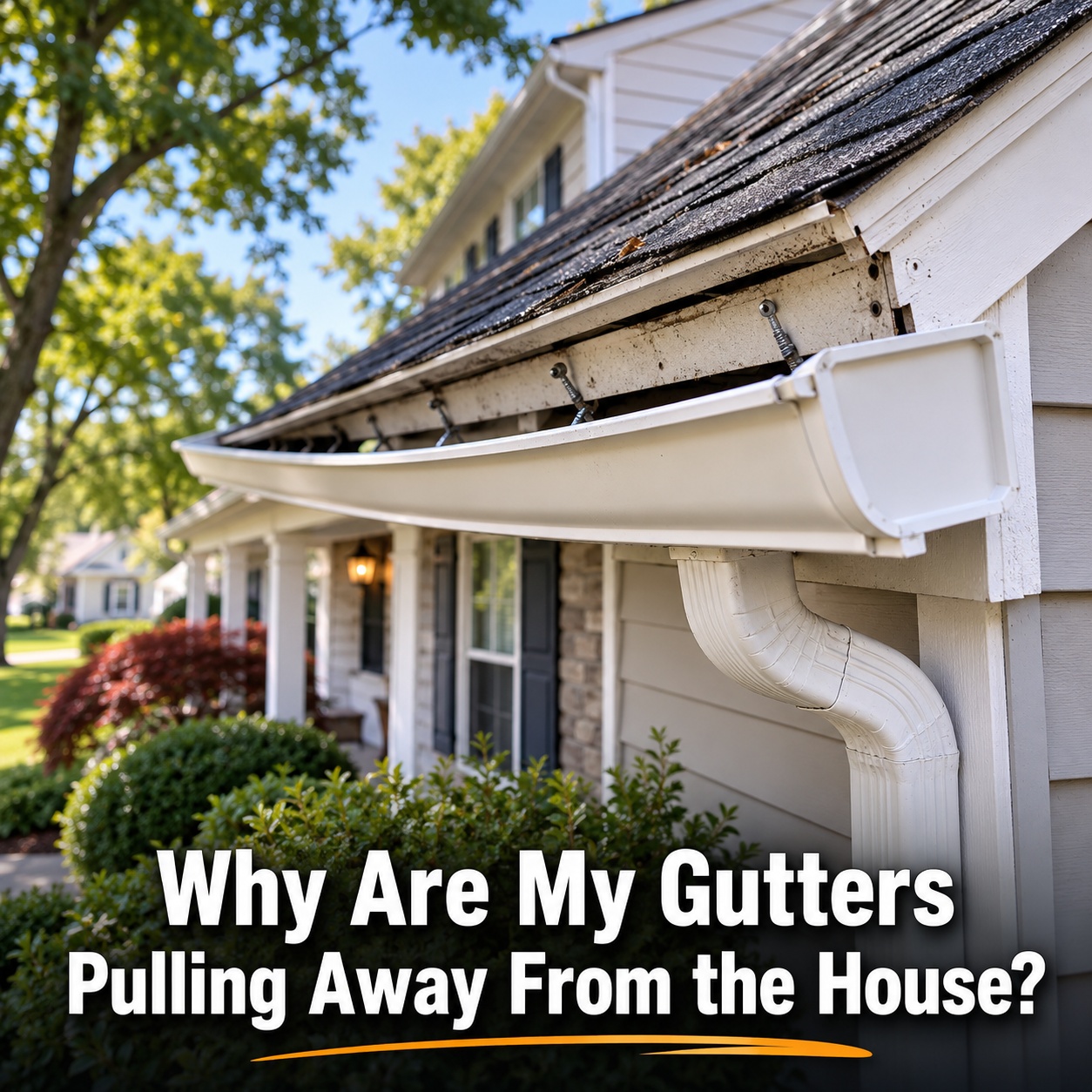
Gutters are one of those home features most people never think about until something goes wrong. They sit quietly along your roofline, channeling rainwater away from your foundation, protecting your siding, and keeping your home exterior dry. But when they start pulling away from the house, that quiet system suddenly becomes a very loud problem.
The good news is that this is a common issue with identifiable causes and real solutions. Whether you’re noticing a small gap between the gutter and the fascia board or watching an entire section sag dramatically after a heavy rainfall, understanding what’s driving the problem is the first step toward fixing it properly. Ignoring it, however, can lead to serious water damage, wood rot, and even foundation damage over time.
This guide walks you through every major reason gutters separate from a home, how to spot the early signs, and what you can do about it — whether you’re a hands-on homeowner or someone who prefers to call a professional.
Understanding Why Gutters Pull Away From the House
How Gutters Are Supposed to Be Attached and Supported
Gutters are designed to hang securely along the lower edge of your roofline, attached directly to the fascia board using gutter hangers, gutter screws, or older-style gutter spikes. The system relies on both the strength of the fasteners and the integrity of the wood or material they’re anchored into.
A properly installed gutter maintains a slight downward slope — called the gutter pitch or gutter slope — toward the downspout. This angle ensures water flows freely rather than pooling. When any part of this system weakens, the gutter begins to shift, sag, or separate.
| Attachment Method | Durability | Common Issue |
|---|---|---|
| Gutter Spikes | Low | Pull out over time |
| Gutter Screws | High | Rare failure if installed correctly |
| Gutter Hangers | High | Fascia rot can loosen grip |
| Gutter Brackets | Medium-High | Can bend under heavy loads |
The spacing between hangers also matters. Industry standards recommend placing gutter hangers no more than 24 inches apart, and even closer in regions with heavy snowfall or ice dams.
Early Warning Signs That Your Gutters Are Starting to Fail
Catching the problem early saves money and prevents larger structural damage. Most homeowners notice the visual signs first — a visible gap between the gutter and the roofline, or a section that appears to tilt outward or downward.
Other early indicators include water spilling over the front of the gutter during rain, rust stains on the siding, or paint peeling near the soffit. These signs suggest the gutter is no longer sitting at the correct angle or has already begun separating.
- Visible gaps between the gutter and fascia board
- Sagging gutters along one or more sections
- Water overflowing the front edge during rainfall
- Staining or mildew on the home exterior below the gutter line
- Loose or missing gutter hangers or screws
Acting on these signs quickly prevents the situation from escalating into a full gutter replacement.
Common Structural and Installation Causes
Loose, Inadequate, or Incorrect Fasteners and Hangers
One of the most frequent causes of pulling gutters is fastener failure. Older homes often have gutters attached with long gutter spikes driven through the gutter into the fascia board. Over time, these spikes work themselves loose through repeated expansion and contraction cycles, leaving the gutter with nothing solid to grip.
Replacing old spikes with gutter screws is one of the most effective repairs a homeowner can make. Screws provide far superior holding power and are far less likely to back out over time. Gutter hangers installed with screws into solid wood offer the most reliable long-term attachment.
Spacing is equally important. Too few hangers mean each one carries more weight, increasing the chance of failure during heavy rainfall or when debris accumulates.
Rotting Fascia Boards and Damaged Roof Edges
Even the best gutter screws can’t hold if the fascia board they’re anchored into has rotted. Wood rot is a silent destroyer — it often develops behind the gutter where moisture gets trapped, making it invisible until the gutter starts pulling away.
When water consistently overflows or backs up behind the gutter, it saturates the fascia board repeatedly. Over time, that moisture causes the wood to soften and decay. If you notice your gutters pulling away from the house and the wood behind them feels spongy or crumbles when pressed, the fascia board needs replacement before any gutter repair will hold.
The soffit — the underside of the roof overhang — can also suffer damage in these situations, compounding the repair scope and cost.
Poor Initial Installation and Use of Substandard Materials
Not all gutter installations are created equal. A poorly executed gutter installation can set up a home for problems from day one. Common installation mistakes include incorrect gutter slope, insufficient hanger spacing, and using undersized gutters that can’t handle the roof’s drainage volume.
If you’re evaluating a new installation or trying to understand a recurring problem, reviewing what a proper gutter installation process looks like can help you identify where things may have gone wrong. Substandard materials — thin aluminum, cheap plastic brackets, or low-grade sealants — also degrade faster and fail sooner than quality alternatives.
Choosing the right gutter system for your home’s size and roof pitch matters enormously for long-term performance.
Environmental and Maintenance-Related Factors
Clogged Gutters, Excess Weight, and Standing Water
Clogged gutters are one of the leading contributors to gutter separation. When leaves, twigs, and debris block the flow of water, it pools inside the gutter channel. A single foot of water-filled gutter can weigh significantly more than an empty one, and that excess weight strains every hanger and fastener holding the system in place.
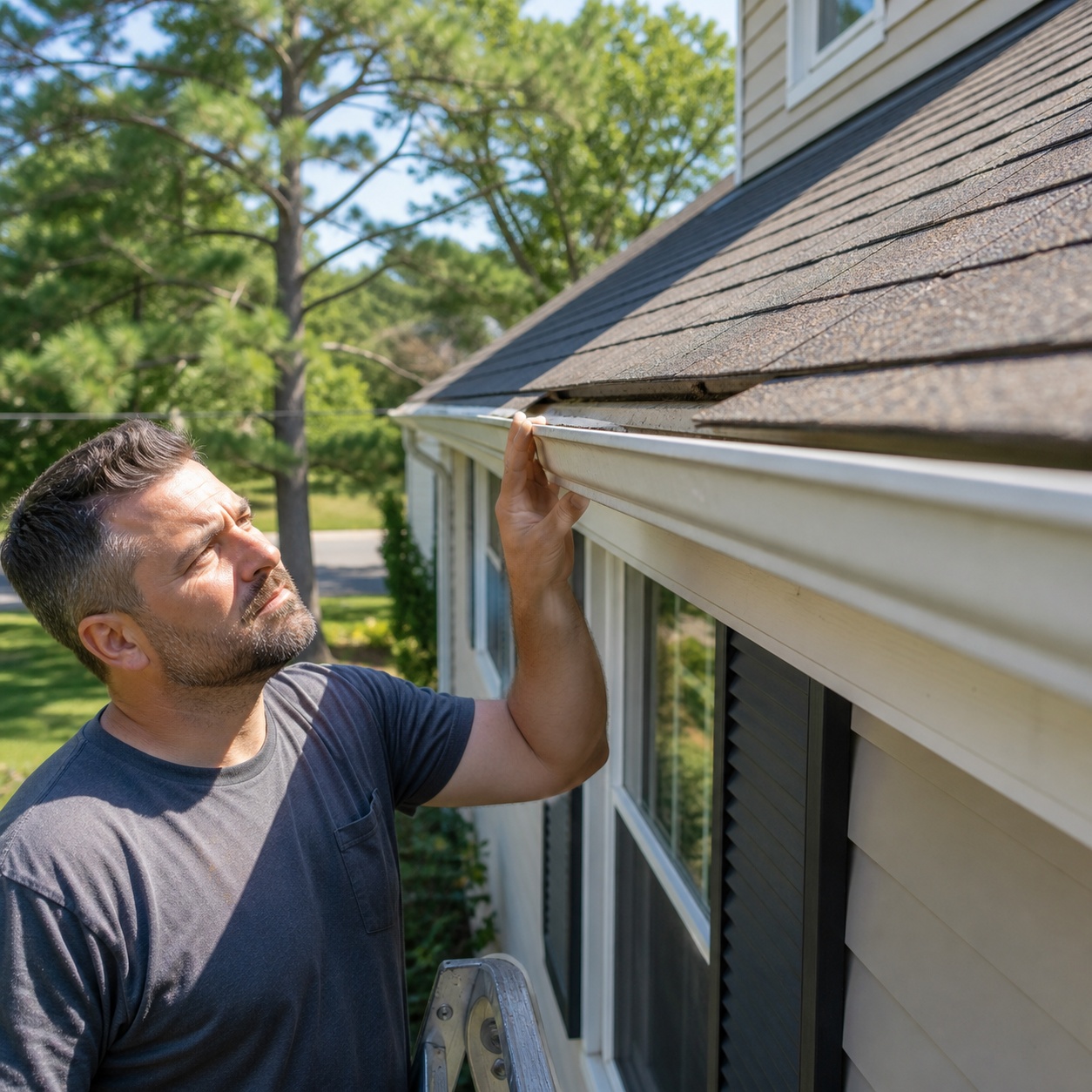
Over time, that constant downward pull causes even well-installed gutters to sag and eventually separate from the fascia board. Regular gutter cleaning is not optional — it’s essential maintenance. If you’re unsure how to do it safely, following a step-by-step guide to cleaning gutters safely can help you get the job done without risking injury.
Standing water also accelerates corrosion in metal gutters and promotes the growth of mold and algae, further weakening the system.
Effects of Weather, Temperature Changes, and Ice
Gutters expand and contract with temperature changes. In climates with cold winters, this thermal movement is significant. Every freeze-thaw cycle puts stress on the fasteners and the connection points between gutter sections.
Ice dams are particularly destructive. When snow melts on a warm roof and refreezes at the cold eaves, it creates a wall of ice that can weigh hundreds of pounds. That weight bears directly down on the gutters, bending gutter brackets, pulling out screws, and tearing sections away from the fascia board entirely.
Heavy rainfall events also test the limits of any gutter system. If the downspout can’t drain water fast enough, the gutter fills and the added weight accelerates separation at weak points.
Impact of Home Settling and Structural Movement
All homes settle over time. As the structure shifts, the roofline and fascia board can move slightly, changing the alignment of the gutters. What was once a perfectly pitched gutter system can develop low spots or reverse slopes that cause water to pool rather than drain.
Foundation movement, soil shifting, and even large tree roots can contribute to this gradual change. The result is sagging gutters that no longer drain properly and eventually begin pulling away from the house at stress points.
This type of problem often requires more than just reattaching the gutter — it may require re-pitching the entire run to restore proper gutter slope and drainage function.
Inspection, Repair Options, and Long-Term Prevention
Step-by-Step Guide to Safely Inspect Pulling Gutters
Before attempting any repair, a thorough inspection is essential. Start from the ground and look for visible gaps, sagging sections, or areas where the gutter has clearly separated from the roofline. Use binoculars if needed to get a closer look without climbing.
When you’re ready to inspect up close, use a stable ladder positioned on level ground. Never lean a ladder directly against the gutter — it can cause further damage or collapse. For homeowners who prefer to avoid ladder work entirely, there are effective methods for maintaining gutters without a ladder that can help with basic assessment and cleaning.
- Check each hanger and screw for signs of rust or looseness
- Press gently on the fascia board to test for softness or rot
- Look for gaps between gutter sections and at end caps
- Verify the gutter pitch by running water through with a hose
- Inspect the downspout connection for blockages or separation
Document what you find before starting any repairs so you have a clear picture of the full scope of work.
DIY Fixes vs. Professional Repair and Replacement
Many gutter repairs are well within the reach of a confident DIYer. Replacing old gutter spikes with gutter screws, reattaching a loose section, or adding additional gutter hangers are all manageable tasks with basic tools. If the fascia board is solid and the gutter itself is undamaged, a straightforward reattachment can solve the problem.
However, if the fascia board shows significant wood rot, if multiple sections are pulling away, or if the gutter system is old and brittle, professional repair or full gutter replacement is the smarter investment. Attempting to reattach gutters to rotted wood simply delays the inevitable and can create more damage in the process.
For persistent sagging issues, a detailed look at how to fix sagging gutters and keep them level provides practical guidance on both temporary fixes and permanent solutions.
Upgrades, Gutter Guards, and Best Practices for Ongoing Care
Prevention is always more cost-effective than repair. Once your gutters are properly reattached and any underlying damage is addressed, a few upgrades can dramatically extend the life of the system.
Gutter guards reduce the amount of debris that enters the gutter channel, cutting down on the weight buildup that causes separation. They’re not a perfect solution, but they significantly reduce cleaning frequency and the risk of clogged gutters causing structural stress. Understanding whether gutter guards are worth it for your specific situation helps you make a smarter investment decision.
- Clean gutters at least twice per year, more often near trees
- Inspect hangers and screws annually and replace any that show wear
- Ensure downspouts extend water at least four feet from the foundation
- Check gutter pitch after major storms or freeze-thaw cycles
- Paint or seal exposed fascia board to protect against moisture
Consistent gutter maintenance is the single most effective way to prevent future separation and extend the life of your entire system.
Conclusion
Gutters pulling away from your house is a problem that rarely fixes itself. The causes range from simple fastener failure to serious wood rot and structural movement, but in every case, early action prevents far more expensive repairs down the road. Understanding the role of gutter hangers, fascia boards, gutter slope, and regular maintenance gives you the knowledge to address the issue confidently — whether you handle it yourself or bring in a professional.
FAQ
Is it dangerous to ignore gutters that are pulling away from the house?
Absolutely. Gutters that are separating from the house allow water to run directly down the exterior walls and pool near the foundation. Over time, this leads to water damage, wood rot in the fascia and soffit, mold growth, and potentially serious foundation damage. The longer the problem is ignored, the more expensive the repair becomes.
Can I reattach pulling gutters myself, or should I hire a professional?
If the fascia board is solid and only a few hangers or screws have failed, reattachment is a manageable DIY project. Replace old gutter spikes with gutter screws for a stronger hold. If the wood behind the gutter is rotted, or if large sections are pulling away, hiring a professional ensures the repair is done correctly and safely.
How can I prevent my gutters from pulling away again in the future?
Regular gutter cleaning prevents the weight buildup that strains fasteners. Annual inspections catch loose hangers before they fail completely. Upgrading to gutter screws and properly spaced gutter hangers provides a stronger attachment. Protecting the fascia board from moisture with paint or sealant also extends its life and keeps your gutters firmly in place for years to come.